
Annual Buddhist Summer School 2026
At Maitripa Centre & Online
10th – 13th January 2026
Online tickets still available!
**Due to the ongoing bushfire situation and out of care for everyone’s safety, the Buddhist Summer School (10–13 Jan) will now be fully online and will not be held at Maitripa Centre.
If you had an in-person ticket, please join us online instead and please don’t travel to Maitripa.
All courses and sessions with our wonderful teachers will continue via Zoom and Online Tickets are still available.
Thank you for your understanding and care for one another. 
Start your New Year by immersing yourself in the rich diversity of Buddhist wisdom and traditions.
A rich tapestry of traditions has been woven by Asian cultures around the essence of the teachings of the Buddha, who lived more than 2,500 years ago. The enduring nature of Buddhism is symptomatic of its integrity as a spiritual discipline that speaks to contemporary experience, especially in a world of increasing challenge and uncertainty.
Over the 42 years since its founding, the annual Buddhist Summer School has become one of the foremost gatherings in Australia for Buddhists from various traditions to discuss and explore topics related to philosophy, practice, and engagement with Western disciplines such as psychology.
Bringing both insight and practical advice from each tradition, the Buddhist Summer School offers a genuinely ecumenical forum for exchange and learning. Now in its 43rd year, the 2026 Buddhist Summer School marks another significant milestone in the history of Buddhism in Australia.
The Buddhist Summer School is held at the Maitripa Contemplative Centre in Healesville and is simultaneously streamed for online participation. Each year the program also includes internationally located or remote teachers who will be streamed to Maitripa Contemplative Centre and online. These courses are identified in the program.
Come and enjoy the beautiful environment of Maitripa Contemplative Centre or participate in the Buddhist Summer School from your home. Either way, the Summer School offers a diverse and rich program for both experienced practitioners and those new to Buddhism.
Click Here For PDF Of The Full Program
OPENING FORUM
Saturday morning – 9.30am-11.00am – Lecture Hall 1 and online.
The Opening Forum is an opportunity to hear the Buddhist Summer School speakers
engage in discussion of the relevance and application of Buddhism to one of life’s big
questions. There will be an opportunity for audience members to ask questions. Includes
both in-person and online speakers. The forum is free and open to all.
Opening Forum Question:
What defines a good society from a Buddhist view?
Presented by (in order of appearance)
Dungse Jampal Norbu
Venerable Thich Linh Tan
Ekai Korematsu Roshi
Sam Bercholz
Traleg Khandro
In order of appearance…
OUR ESTEEMED TEACHERS & TEACHING TOPICS

BODHICITTA AND DYNAMIC ENGAGEMENT
(Streaming live from U.S.A.)
Dungse Jampal Norbu
Saturday Morning and Sunday Morning
Lecture Hall 1 (3 Units)
Bodhichitta, the practice of the awakened mind, rests at the core of Mahayana Buddhism. The practice focuses on the aspiration, application, and essential understanding of compassion and wisdom. Once the foundations of bodhichitta are established, compassionate activity and meditation take on a dynamic quality that fully engages the nuanced and myriad appearances of our mind and its world.
Dungse Jampal Norbu is known for his pragmatic, curious, and creative approach to traditional Buddhist teachings. Since 2020, Dungse-la has given many Lojong teachings in Mangala Shri Bhuti and other dharma communities.
He has been involved with the study and practice of Buddhadharma all his life, having grown up under the guidance of his parents Dzigar Kongtrul Rinpoche and Elizabeth Mattis Namgyel. Jampal grew up within the Mangala Shri Bhuti community, and formally joined the Sangha at the age of 17. He completed an extensive study course in Buddhist philosophy and translation in northern India.
Dungse-la has been formally teaching dharma since 2008, has completed a series of hundred day meditation retreats, manages a summer camp for Buddhist children, hosts the EveryBodhi dharma podcast, and chairs the board of Mangala Shri Bhuti and Middle Way Initiative.

PRACTISING BUDDHISM IN THIS WORLD
(In-person & Online)
Venerable Thich Linh Tan
Saturday Morning & Sunday Morning
Lecture Hall 2 (3 Units)
This course examines how to apply the Buddha’s teachings in today’s fast-paced, high-tech world.
Traditionally, Buddhism is practiced in peaceful, remote settings, but modern society has made even these places noisy and polluted. We must adapt to new challenges while maintaining inner peace through mindfulness. Technology often fuels our desires, making mindfulness essential for returning to the present moment and gaining wisdom. Consumerism increases cravings and suffering, destroying true happiness. Rising mental health issues—stress, anxiety, and depression—often result from societal pressures and can lead to physical ailments. Understanding this helps us nurture compassion. Practising self-discipline through the Buddha’s teachings provides stability amid the chaos of modern life.
Finally, the education system should focus on fostering an awareness of our genuine needs rather than stimulating the pursuit of superficial wants. By cultivating this understanding, individuals can become more compassionate and mindful of their choices and actions. Even small, thoughtful actions can have a significant and far-reaching impact on both the individual and society; the individual is indeed the society.
Venerable Thich Linh Tan: Ordained with the Dharma name Thich Linh Tan, Venerable fled Vietnam in 1983 as a refugee, as one of the two million people who escaped Vietnam after 1975. Even though born into a Buddhist family by tradition, Venerable Thich Linh Tan took refuge in the Triple Gem and became an upasaka in 1991 and studied the Dharma, eventually becoming a monk and studying under Most Venerable Thich Huyen Vi in France. Venerable Thich Linh Tan studied Sanskrit and Pali in India and then returned to Melbourne and founded Nalanda Institute UK and Nalanda Institute Australia in 2012 and 2013 respectively. Thich Linh Tan conducts Dharma classes in both Vietnamese and English, with a focus on supporting laity in the pursuit of the Dharma.

THE PRACTICE OF BUDDHISM AND MEDITATION IN EVERYDAY LIFE
(In-person & Online)
Dechen Davies
Saturday Afternoon
Lecture Hall 1 (2 Units)
This course invites us to deepen our connection with the practical implications of Buddhist understanding and practice in our everyday lives.
Together we will explore:
• Connecting to the essence and purpose of Buddhism
• The deepening benefits and effects of meditation
• How philosophy and practice can truly impact our lives
• How we can bring our understanding of Buddhist principles into daily life with clarity, joy, balance and intention.
Dechen Davies has been a student of Traleg Kyabgon Rinpoche for more than 25 years. For eight of those years she was ordained as a nun and engaged in several short-term retreats. She is a provisional psychologist and has a research master’s in youth suicide prevention. She is passionate about bringing joy into dharma practice and learning how to be gentle with our mistakes.

THE MIND CANNOT BE HELD ONTO
– FOUR DHARMA TALKS
(In-person & Online)
Ekai Korematsu Roshi
Saturday Afternoon and Sunday Afternoon
Lecture Hall 2 (4 Units)
In this four-part series, Ekai Roshi explores Zen Master Dōgen’s Shōbōgenzō chapter Shin Fukatoku (The Mind Cannot Be Held Onto). Drawing from the Diamond Sutra and Dōgen’s oral presentation, these talks examine how “mind” cannot be grasped—past, present, or future—and how awakening arises through this very ungraspable reality.
Through Tokusan’s encounter with the old woman selling rice cakes, Dōgen illuminates the difference between intellectual understanding and direct realization. Each session unfolds a facet of practice: the fleeting nature of thought, the folly of attachment to knowing, the humility of meeting a true teacher, and the transformative power of awakening.
Participants are invited to inquire deeply—through meditation and reflection—into how the ungraspable mind manifests in everyday life, moment by moment, breath by breath.
Ekai Korematsu Roshi has been the Abbot and Teacher of the Jikishoan Zen Buddhist Community in Melbourne since 1999. He was ordained by Kobun Chino Roshi at Haiku Zendo, Los Altos, California, in 1976, and received Dharma Transmission from Ikko Narasaki Roshi at Zuioji Monastery, Japan, in 1986. His formal monastic training spanned twelve years across three monasteries—Eiheiji, Zuioji, and Shogoji. In addition to his role at Jikishoan, Ekai Roshi has taught at the annual Buddhist Summer School and the Winter Zen Lecture series since 1999, at the invitation of Traleg Kyabgon IX. He has also taught Buddhism in Japan, the USA, India, and New Zealand for more than forty years.


A DIALOGUE: TRANSFORMING BUDDHIST PHILOSOPHICAL UNDERSTANDING INTO DIRECT EXPERIENCE
(In-Person & Online)
Dr John Powers (In-person) & Venerable Dr Karma Lekshe Tsomo (Streaming live from the U.S.A)
Sunday Afternoon
Lecture Hall 1 (2 Units)
A common misunderstanding of Buddhism is to separate the ‘philosophy’ from practices such as meditation, while traditionally, study and practice go together. In fact, spiritual transformation occurs when the philosophy is lived. In this way, being a scholar and a practitioner is not a contradiction, while engaging in logical reasoning is valued when it relates to experience. Dr John Powers (in-person) and Venerable Dr Karma Lekshe Tsomo (online from the USA) will discuss these issues drawing on their respective fields of scholarship to deepen our understanding of both Buddhism and being a Buddhist in the contemporary world. The dialogue will be hosted by the Journal of Integral Buddhism, a joint venture between E-Vam Institute and Shogam Publications.
Venerable Dr Karma Lekshe Tsomo (Online) is a specialist in Buddhist studies and has taught at University of San Diego since 2000. She offers classes in Buddhist Thought and Culture, World Religions, Comparative Religious Ethics, Religious and Political Identities in the Global Community, and Negotiating Religious Diversity in India. Her research interests include women in Buddhism, death and dying, Buddhist feminist ethics, Buddhism and bioethics, religion and politics, Buddhist social ethics, and Buddhist transnationalism. She integrates scholarship and social activism through the Sakyadhita International Association of Buddhist Women and Jamyang Foundation, an innovative education project for women in developing countries.
Dr John Powers is a Fellow of the Australian Academy of Humanities and held positions at the Australian National University, Deakin University, and the University of Melbourne. He has published 20 books and more than 100 academic journal articles and book chapters on subjects including Yogācāra, Madhyamaka, meditation theory and practice, gender, Tibetan history, propaganda on Tibetan Buddhism, Buddhism in Australia, and environmental history.

CONQUERING THE FOUR MARAS
(Streaming live from U.S.A.)
Sam Bercholz
Monday and Tuesday Morning
Lecture Hall 1 (4 Units)
When Shakyamuni Buddha sat beneath the Bodhi Tree, poised on the edge of enlightenment, he was confronted by the demon Mara—embodiment of temptation, fear, desire, and doubt. Mara unleashed every form of seduction, provocation, and confusion imaginable to divert the Buddha from awakening. However, the Buddha saw through these illusions, conquered Mara, and attained complete realization—opening the path of liberation that has inspired beings for over 2,600 years.
As modern-day dharma practitioners, we too face our own Maras: the subtle and not-so-subtle forces of distraction, emotional turmoil, death, and delusion that pull us from the path.
We will explore the nature of the Four Maras in the context of our lives, how to recognize their patterns as they arise, methods for transforming them into insight, and how to meet each challenge with courage and clarity.
Sam founded Shambhala Publications in 1969. He has been a Buddhist practitioner since the age of 19 and was ordained as a Zen Buddhist priest in the Chogye Zen Order of Korea. He met Chogyam Trungpa Rinpoche in 1970 and was a close student of his for 17 years. Trungpa Rinpoche empowered him to teach meditation, Buddhadharma including Vajrayana, and the Shambhala teachings. After Trungpa Rinpoche’s passing, he auspiciously became a disciple of Thinley Norbu Rinpoche. He received the teachings and empowerments of the Nyingma, particularly the Dudjom Tersar and was empowered to transmit what he had learned. He was invited by Traleg Kyabgon Rinpoche to teach what he had learned from his masters, and has been doing so for over two decades at the various Kagyu Evam Institute Centers in Australia, New Zealand, and the U.S. He is the author of A Guided Tour of Hell and co-editor of the international bestseller The Buddha and His Teachings (originally published as Entering the Stream).

PRACTICING BUDDHISM IN THE AGE OF AI: A HUMANISTIC PERSPECTIVE
(In-Person & Online)
Venerable Dr Juewei
Monday and Tuesday Morning
Lecture Hall 2 (4 Units)
How might Buddhist wisdom engage with the ethical, spiritual, and existential disruptions of artificial intelligence? Drawing on Jamais Cascio’s BANI framework (Brittle, Anxious, Non-linear, and Incomprehensible) this course explores how the teachings of the Diamond Sutra, particularly its prajna insight and the bodhisattva path, provide a grounded and compassionate human response to a rapidly transforming technological world. Participants will engage with both the immense promise and the profound challenges of generative AI through the lens of Humanistic Buddhism, seeking ways to cultivate clarity, resilience, and moral discernment in our BANI world.
Venerable Dr Juewei is Head of Program for Applied Buddhist Studies and Humanistic Buddhism, and Director of the Humanistic Buddhism Centre at Nan Tien Institute, Australia. In her roles, she teaches and leads research linking classical Buddhist wisdom with contemporary life. As an ordained monastic in the Fo Guang Shan Buddhist order since 2002, she exemplifies the scholar-practitioner: bringing a grounded Humanistic Buddhist approach to ethics, contemplative practice, and community engagement. With an early career in computer science and artificial intelligence, she now explores Buddhism and AI, contemplative pedagogy, and the creation of digital tools like “MettāVerses” that empowers communities of loving-kindness online and in-person. She is currently leading multi-year research projects Buddhism in Australia and Buddhism in the Sea of Islands, reflecting her commitment to bridging rigorous scholarship, contemplative training, and compassionate action.
THE LOGIC OF BUDDHISM: HOW REASONING HELPS PRACTICE
(In-person & Online)
Dr John Powers
Monday and Tuesday Afternoon
Lecture Hall 1 (4 units)
Many people in the west believe that Buddhism has no use for logic and reasoning and that they are impediments to serious practice, but this view is at odds with much of Tibetan Buddhism. All schools employ reasoning, debate, and training in logic as integral parts of the path and the training of students, and throughout the history of the tradition many of its most renowned masters have published works that integrate the dialectical debate format and that use the techniques of logic developed by Nāgārjuna, Candrakīrti, Dignāga, Dharmakīrti, and Vasubandhu, as well as detailed grammatical analysis that follows rules and procedures shared by Buddhists and their non-Buddhist opponents in India. This course will focus on the system of philosophy shared by all Tibetan Buddhist orders, referred to as “tseni” (mtshan nyid), literally “definition” or “characteristic” and the procedures of formal debate, “tsöba” (rtsod pa), which involves face-to-face disputes between monks and nuns that explore the ramifications of Buddhist doctrines and scriptural statements. These are compared to the way two swords sharpen each other in a duel and are designed to facilitate deeper understanding of Buddhist tenets and practices, which in turn deepens and focuses practice. After an initial overview of Buddhist logic and debate in India and Tibet, the second session will explore an example of how these techniques inform one of the most important debates in Tibetan Buddhism, which began in the 15th century and continues today, concerning Madhyamaka views and practices.
Dr John Powers is a Fellow of the Australian Academy of Humanities and held positions at the Australian National University, Deakin University, and the University of Melbourne. He has published 20 books and more than 100 academic journal articles and book chapters on a wide range of subjects, including Yogācāra, Madhyamaka, meditation theory and practice, gender, Tibetan history, Chinese propaganda on Tibetan Buddhism, Buddhism in Australia, and environmental history. He recently retired and is thoroughly enjoying his new status.

ZEN MIND, BEGINNER’S MIND – AN INTRODUCTION TO ZEN MEDITATION
(In-person & Online)
Teishin Shona Innes
Monday and Tuesday Afternoon
Lecture Hall 2 (4 units)
In these sessions, the three forms of Zen meditation – bowing, sitting and walking – will be introduced and practiced. The classic text, Zen Mind, Beginner’s Mind by Shunryu Suzuki Roshi, will be used to support this essential practice through reading, reflection and discussion. The practice will also be supported by readings from a talk by Ekai Roshi on the Buddha’s “First Night Watch”.
TEISHIN SHONA INNES. As a disciple of Ekai Korematsu Roshi, Teishin received Dharma transmission in September 2025 and is an Assistant teacher for Tokozan Jikishoan.
Teishin has been a student of Jikishoan’s Integrated Buddhist Studies program since 2010 and prior to joining Jikishoan in 2004, she practised under the guidance of the Venerable Traleg Kyabgon Rinpoche for 9 years at Kagyu E-Vam Institute.
Teishin received monastic ordination in Japan in 2023 from Seido Suzuki Roshi, Abbot of Toshoji and completed her formal monastic training in 2024 after a 3-month practice period as head monk (Shuso).
THE PROGRAM TIMETABLE
**Please note times are in Melbourne Australia time (AEDT) Please convert if necessary here:: www.worldtimebuddy.com.

THE VENUE

**Due to the ongoing bushfire situation and out of care for everyone’s safety, the Buddhist Summer School (10–13 Jan) will now be fully online and will not be held at Maitripa Centre.
If you had an in-person ticket, please join us online instead and please don’t travel to Maitripa.
All courses and sessions with our wonderful teachers will continue via Zoom. Below are all the Zoom session details.
Thank you for your understanding and care for one another.
MAITRIPA CONTEMPLATIVE CENTRE
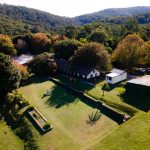
Come and enjoy the Summer School experience at the beautiful Maitripa Contemplative Centre. Established by Traleg Rinpoche IX, Maitripa Contemplative Centre is surrounded by the beautiful lush Toolangi forest amongst the upper Yarra Valley, amongst beautiful diverse and established gardens, vibrant birdlife and the hundreds of acres of surrounding mountain ash forests.
Maitripa Contemplative Centre is 5 minutes from Healesville Town and just 75 minutes from Melbourne CBD.
Catering
Delicious and healthy vegetarian food will included when you purchase accommodation. For those not staying overnight, you will have to opportunity to purchase food tickets OR you can purchase light refreshments (cakes and coffee) at Dogen’s cafe during the day. Apsara bar is open in the evening for you to relax with a glass of wine. All amidst a conducive environment of like-minded people, coming together to learn from the profound resource of practice and wisdom that the traditions of Buddhism have to offer.
OR…

ONLINE VIA ZOOM- FROM HOME!
The Buddhist Summer School offers an interactive online experience, with the ability to ask Teachers questions.
Online participants are very welcome and can enjoy the Buddhist Summer School from the comfort of their own homes!